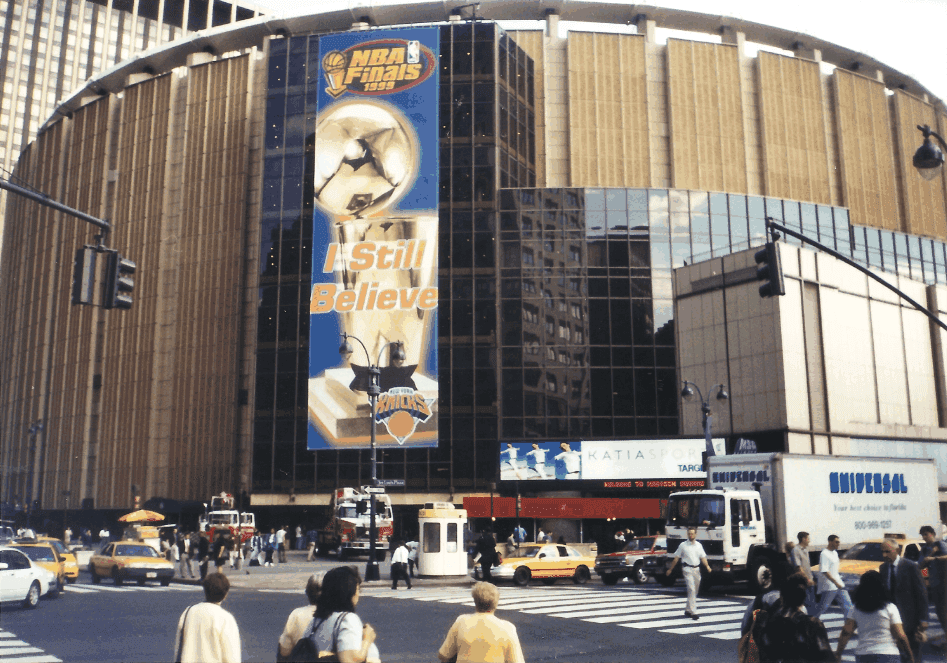
The Ghost of Madison Square Garden's Past
A 1999 rematch, two franchises that became their cities, and the uncomfortable truth about loving a team that never wins.
Jonathan Giles · June 5, 2026 · 6 min
A 1999 rematch, two franchises that became their cities, and the uncomfortable truth about loving a team that never wins.
Ghosts and goblins run amok, haunting the tunnels beneath Madison Square Garden. Their cold breath coils up into the rafters, where the title banners stop short — 1970, 1973, and then, for decades, nothing more than a whisper begging for release.
But this year, the Garden has gotten loud enough that you can feel the ghosts begin to turn over in their sleep.
The last time they nearly woke was 1999. The whole world was holding its breath that summer, waiting for an apocalypse known as Y2K. The euro had just been born in the E.U. Neo had just chosen the red pill. And Prince’s old prophecy had finally, eerily come due, and the whole country was getting ready to party like it might be the last one.
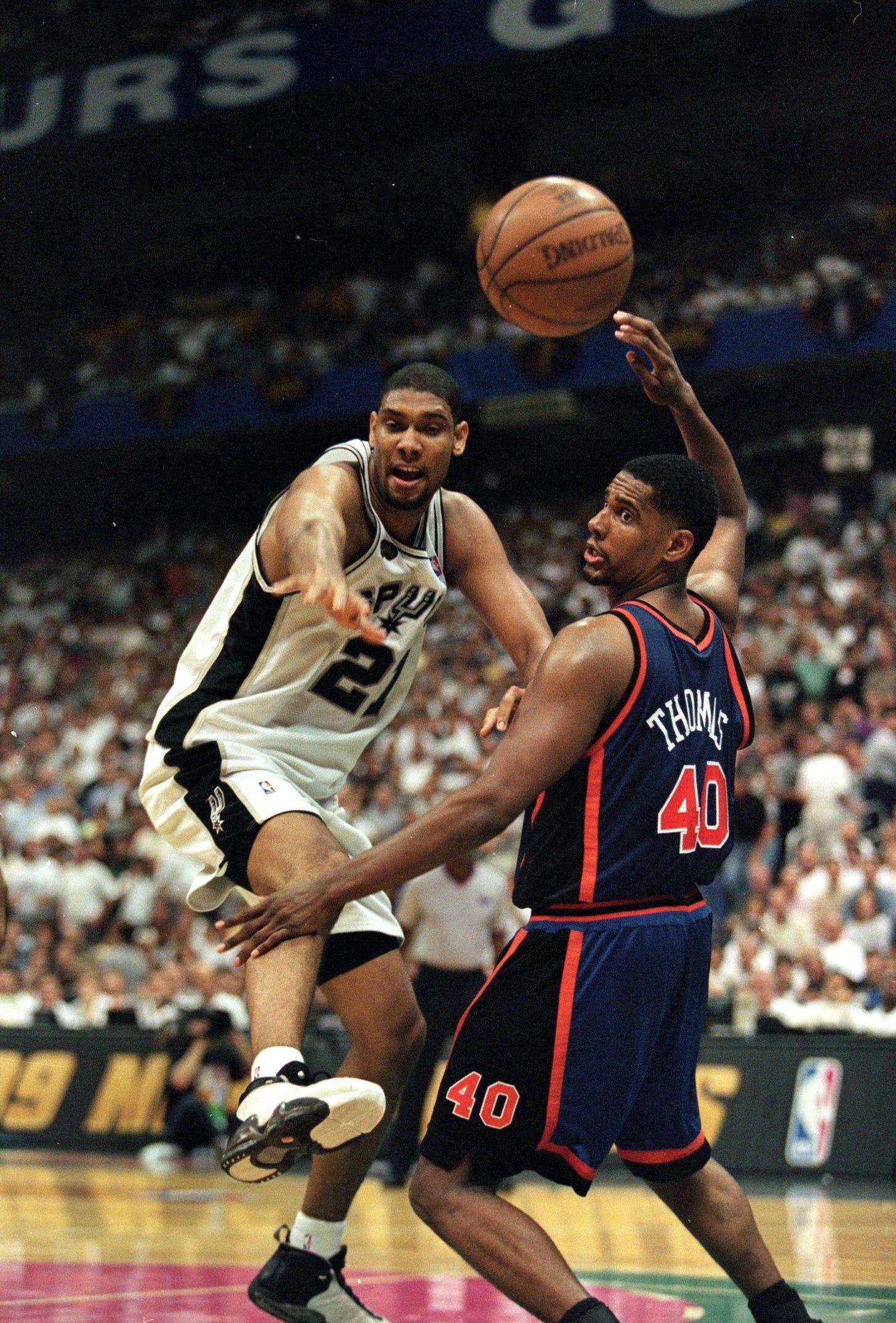
That summer, the Knicks were in the Finals. The opponent, ironically enough, was the San Antonio Spurs.
The Spurs ended up winning that series against an Ewing-less Knicks 4-1, and the ghosts went back to sleep. Twenty-seven years later, the Knicks are walking down that same tunnel, and the city that never sleeps is about to find out whether some hauntings are a curse or just unfinished business.
Today’s stakes only make sense if you remember what the Knicks meant to this city back then. In 1999, New York ran on hip-hop, and the sound belonged here the way Basquiat belonged to a canvas. DMX barked, and the city barked back. Jay-Z had turned Annie’s “Hard-Knock Life” into an anthem. Hot 97 poured out of every cab window, and the voice on the records was the voice on the corner, all speaking with the fluency that only New York could claim. The Knicks of that era included: Latrell Sprewell, arriving as a man the league had tried to bury; Allan Houston and his silky shot; Larry Johnson — aka Grandmama — and his swagger; all of them playing a brand of ball that looked the way the city felt. The Knicks were hard and stylish, wearing their feelings on their sleeves, unwilling to apologize for any of it. They were a self-portrait of New York. You didn’t root for them because they won. You rooted for them because they were you, scaled up to the size of an arena and broadcast to the world.
To sit courtside at the Garden was to have arrived. Spike Lee and Ben Stiller, yes, they were there then. Adam Sandler had not left for the West Coast yet, and Evander Holyfield and Billy Crystal were still household names. Celebrity row had prestige before Timothée Chalamet was old enough to manspread in the front row. If you were courtside back then, it wasn’t for social media and barely for the New York Post. It means you were a fan — better yet, an ambassador. The city is watching itself watch its team. That’s the thing about New York and its team: the meaning never depended on the trophy.
Meanwhile, in the smaller Southwest market, San Antonio meant something too. If it had ghosts, they were Tejano, and they spoke quieter, and from much farther away.
Led by David Robinson, known as The Admiral — and not because of some clever Gen Z marketing campaign — attended the Naval Academy and served as an officer before he ever played a minute in the league. The discipline he brought from the military came to define the Spurs. When Tim Duncan arrived from St. Croix in the U.S. Virgin Islands, the franchise found its second quiet giant, a superstar who played like he was allergic to the spectacle.
While New York performed its identity, San Antonio withheld it. And where the Knicks were rooted in the culture of the city’s streets, the Spurs were quietly building something more global. The Spurs were a team that would soon run on a Frenchman, Tony Parker, and an Argentine, Manu Ginobili — the league’s outpost in a majority-Latino city that saw, in a roster gathered from everywhere, a reflection of itself. The Spurs didn’t export a look. They exported a way of playing: a sensibility, a proof that excellence could be humble and captivating at the same time.
And in 1999, against New York, they won their first NBA championship.
Twenty-seven years is a long time to wait, and New York waited the way it does everything: loud and dressed for it. There were a lot of lean years in there — bad drafts, worse owners, a parade of saviors who weren’t — and the city did the only thing it knows how to do with disappointment: it made the losing fashionable.
The orange and blue turned up on hoodies and fitted caps long before the team was worth the merch. The Garden sold out anyway. The World’s Most Famous Arena, as it never stops reminding you, for a couple of decades made its most famous nights into memories of losses and noise: the FIRE DOLAN chants, the brief insanity of Linsanity, and a new savior every other season who turned out not to be “him.” And the loss only made the legend bigger. You could rep the Knicks your whole life without ever watching them win a thing — plenty of people did — because that was never really the deal. The team was how you told the world where you were from. New York took not-winning and made it a posture, an aesthetic, a faith.
Which brings us, at last, to the ghost — or in this case, “the alien” — of basketball’s future: Victor Wembanyama.
Twenty-two years old, French, and seven-foot-everything — Wemby has put the Spurs on his back and led them to center stage, a place they hadn’t stood since 2014. It’s tempting to call him Duncan’s heir: another generational big in his first Finals, as if the universe decided to run it back.
But Wemby does not carry the same calmness that Duncan exuded. He doesn’t have a blank face when facing an opponent. His bank shot is not as automatic. He’s not a continuation of the quiet, confident Black excellence that Robinson and Duncan embodied. Wemby is more of the next step in what San Antonio always was: global, borderless, pointed at basketball’s future rather than any one city’s past. He is not a break from the Spurs’ identity. He is its logical end.
The Knicks, who will try to defend him, grab him, and stop him by any means necessary, are a more familiar kind of contender. But they carry something Wemby doesn’t: 53 years of a city teetering on the verge of eruption. But they carry something Wembanyama doesn’t: 53 years of a city’s wanting. When they took the floor Wednesday night in San Antonio, they weren’t only playing the Spurs — they were playing the memory of the last time, and every empty year since. And this time, they drew first: New York took Game 1 on the road, 105-95, in what already promises to be a fight to the finish.
San Antonio has tasted the joy of winning the finals five times and is hoping this will launch a new run led by a kid from France who wasn’t even born the last time these two met. New York, on the other hand, which took game one in the series, has flirted with this stage before but hasn’t closed the deal since 1973. But out of that absence, they built one of the richest sporting cultures on earth.
When you look at it that way, you realize what the Garden’s ghosts have been trying to tell us all along: a city can love its team most for what it never gave them.
More like this
A Nation You Can Carry
Haiti returned to the World Cup after 52 years - without a home, and now without the right to wear its own history. So it brought the one thing no committee…
Jonathan Giles · 5 min
I Love Boosters, Boots Riley, and the Battle of Black Art at the Box Office
Despite their impact, nearly all culturally specific, Black-directed films are produced with budgets below $40 million, but are still expected to compete with…
Xero Gravity · 6 min
Megan Thee Stallion: The Consequences of Being A Sexual Black Woman
After the death of her parents, grandparents, and the shooting by Tory Lanez, Megan Thee Stallion was facing one battle after another. For many Black women,…
Habiba Katsha · 5 min